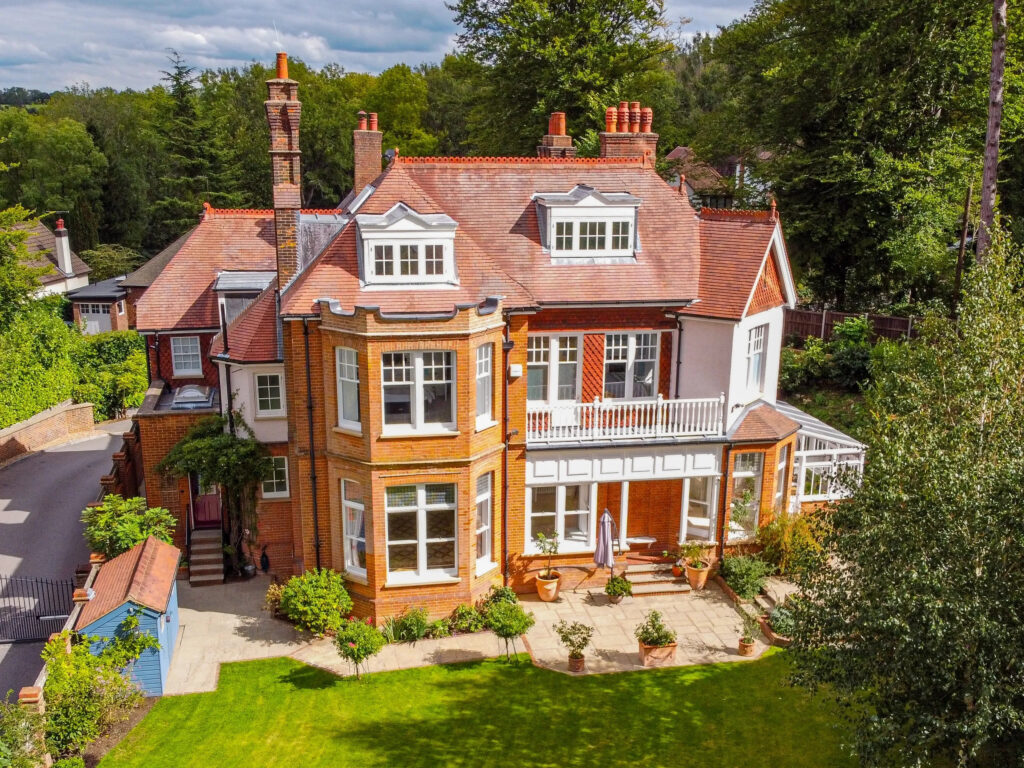
City merchants, an RAF pilot, a professor and successive families have made Twyford their home. Their stories are traced through original records, photographs and first-hand recollections.
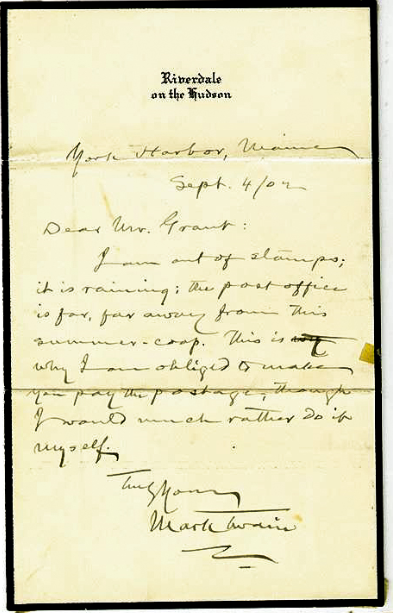
From the archive · 1902 Mark Twain’s letter to Lester Grant at Twyford.
A remarkable connection
Mark Twain writes to Twyford
On 4 September 1902, Samuel Clemens—better known as Mark Twain—wrote from York Harbor, Maine, to Lester Grant at Twyford, Tupwood Lane.
“I am out of stamps; it is raining; the post office is far away from this summer camp.”
With characteristic humour, Twain apologised for making the young Lester pay the postage. It is a small, extraordinary connection between this Caterham house and one of America’s most celebrated writers.
The envelope was addressed in Twain’s hand to “Mr Lester Grant, Twyford, Tupwood Lane, Caterham Valley, England”.
Chapter 01
1895—1918
The Grant family
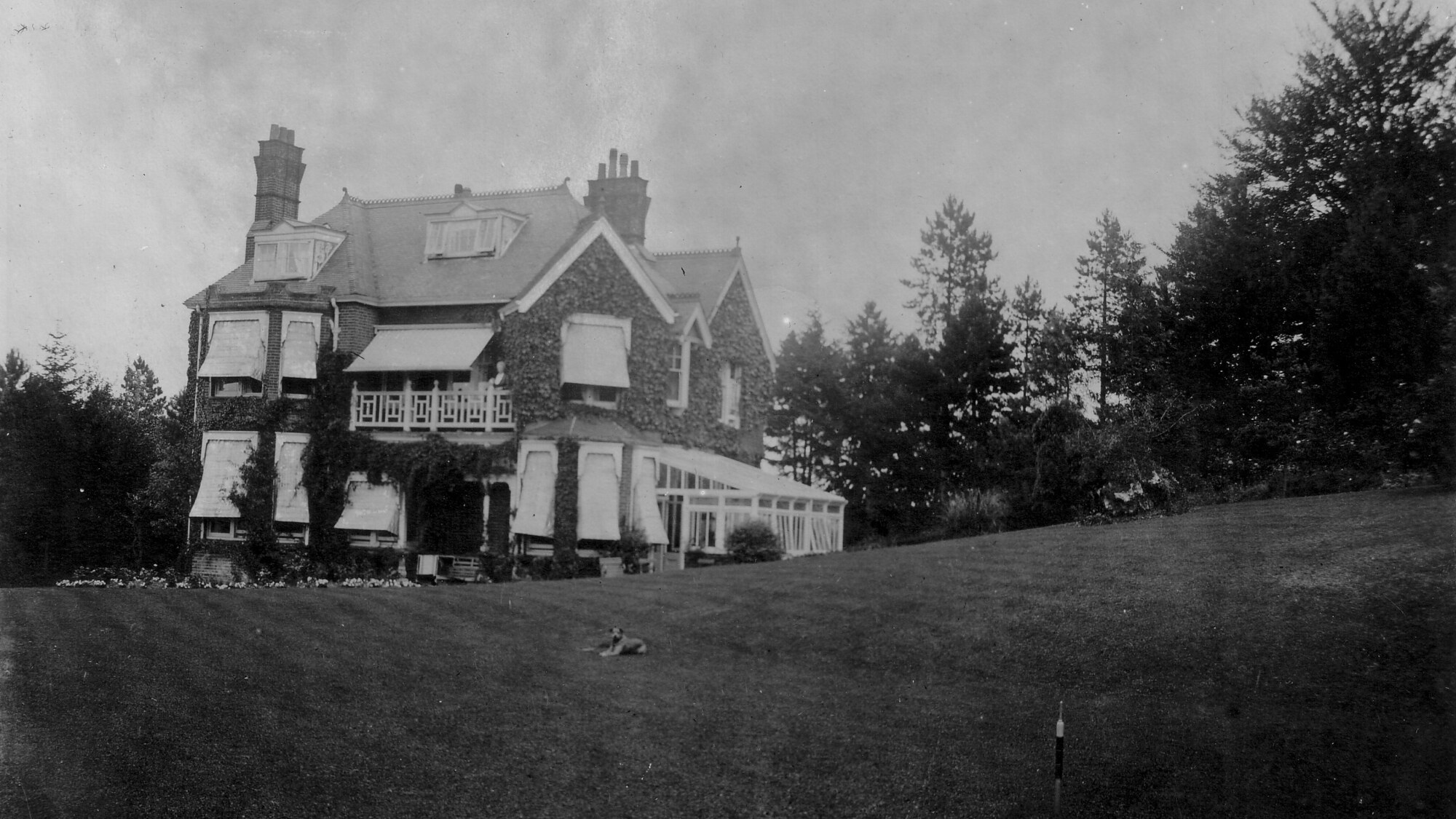
Archive image The garden elevation in 1918, at the close of the Grant family’s chapter.
Twyford was built for Harry Grant, a City fruit broker, and his wife Florence Mary Fox. It was both an ambitious new family home and the centre of a large hillside estate above Caterham.
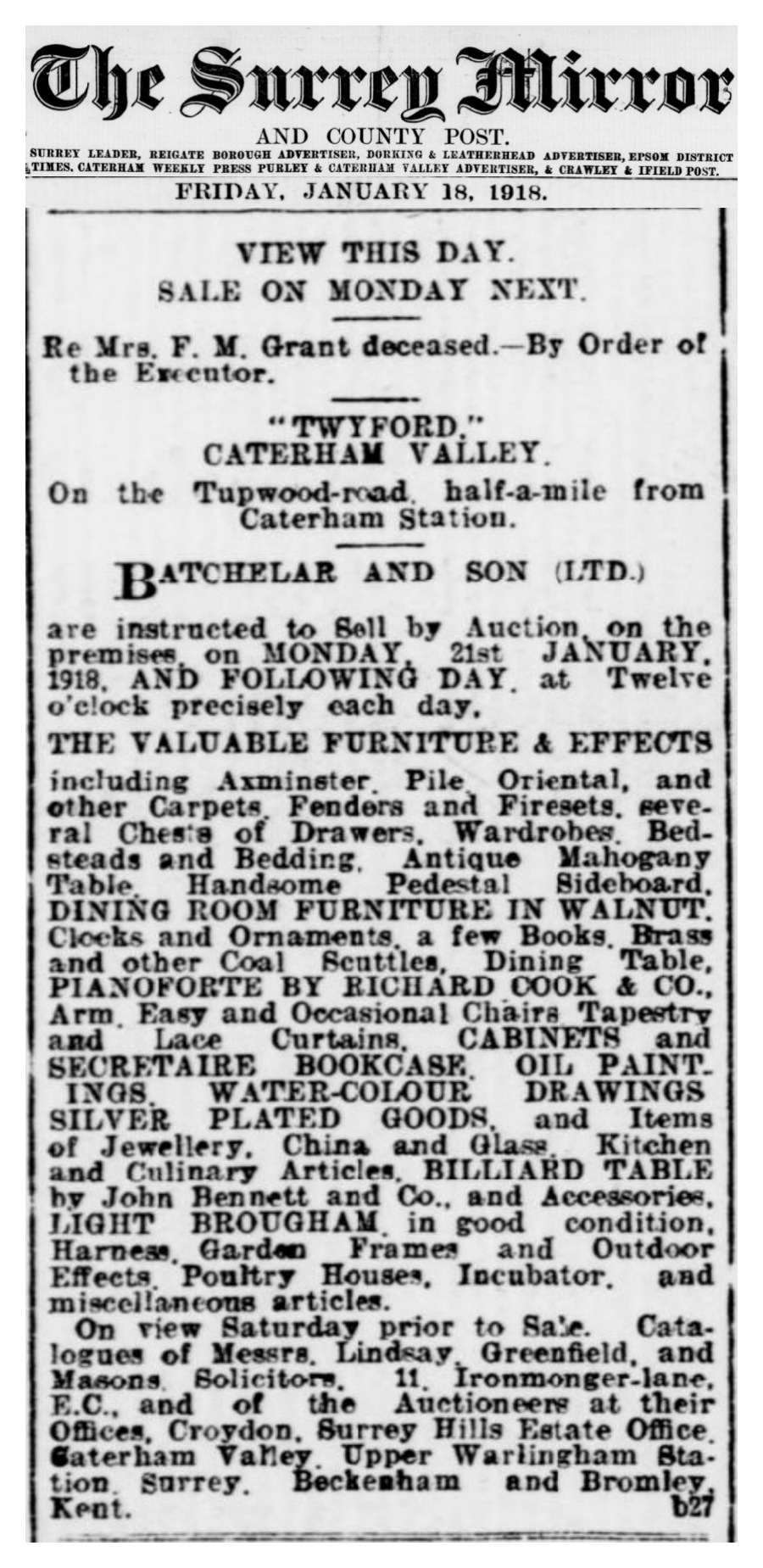
Grant acquired the land on 10 November 1894 and plans for a detached residence were submitted in February 1895. James Longley & Co. built the house soon afterwards. Harry was a partner in Knill & Grant, the long-established fruit brokers of Monument Buildings, Pudding Lane. The family lived here with their sons, Harry Lester and Noel, and household staff. Harry died in 1916; Noel, a Royal Field Artillery officer, was killed in France in May 1917. Florence died that December and the contents of Twyford were auctioned in January 1918.
Key dates
1894
Harry Grant acquires the land
1895
Twyford completed; rate books record the house
1901
The Grants, two sons and three servants are in residence
1915
Lester Grant marries Lilma Browne in Caterham
1916
Harry Grant dies
1917
Noel Grant is killed in action; Florence Grant dies
1918
Contents of Twyford sold at auction
Family life & further details
The house took its name from Harry and Florence’s earlier home in Birdhurst Rise, Croydon. Before construction they rented nearby Upwood House, probably while the new house was being built.
The 1895 rate book records a house in Tupwood Lane with one acre and a rateable value of £85; Harry also leased six adjoining acres from J. T. Morton, giving Twyford a setting of roughly seven acres.
At the turn of the century the household included two parlour maids and a cook; a groom and gardener lived at Twyford Lodge. Newspaper advertisements record cooks, housemaids, garden boys, poultry and a coachman.
Harry was active at St John’s and wrote locally on free trade. The family collected art, and Harry painted as an amateur. In 1912 Twyford was advertised as a “well-built sunny house” with views from every window.
Lester Grant later served in both world wars, illustrated Rickety Rackets and became director of theatres in Brighton. His correspondence included the remarkable 1902 letter from Mark Twain now held in the archive.
Sale notice · January 1918The Surrey Mirror notice for the two-day auction of the Grant family’s furniture, effects and household contents.
Chapter 02
1918—1952
The Hendrey family
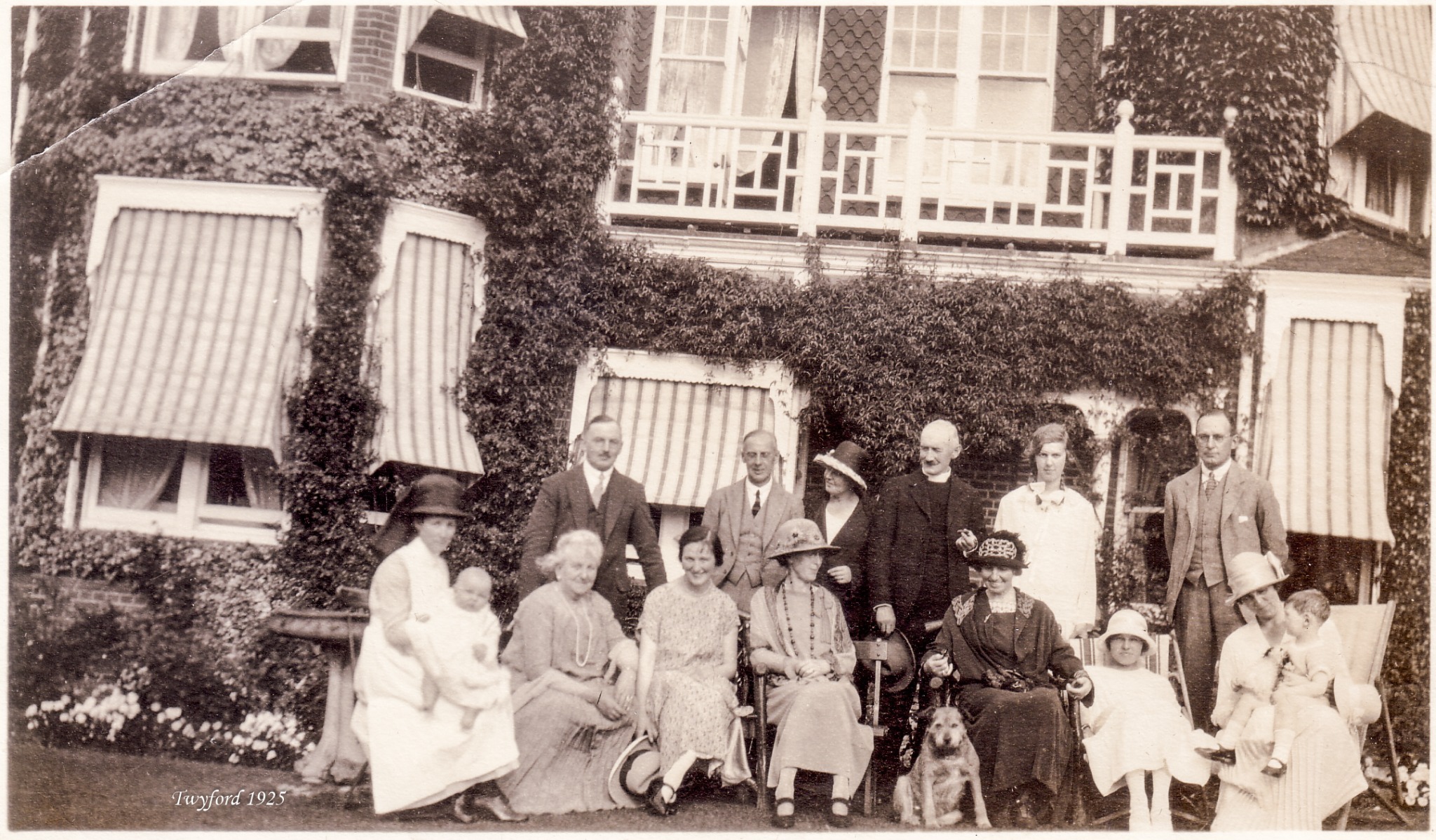
Archive image A summer party at Twyford in 1925, photographed on the garden elevation.
William John Cossar Hendrey, a City merchant and sworn broker, acquired Twyford around 1918–19. For more than three decades the house was a setting for family life, garden parties, music and far-reaching professional connections.
William and Henrietta Hendrey brought up their four children at Twyford. Their daughter Henrietta Katherine was recorded at the house during wartime nursing service, while later recollections describe a pianola in the drawing room and children playing in the large garden. Henrietta died in 1930 and William died at Twyford in 1947. The family retained the house until its sale in 1952.
Key dates
c.1918–19
William Cossar Hendrey acquires Twyford
1921
Henrietta Katherine Hendrey marries Walter Lines
1925
Summer garden party photographed
1930
Henrietta Hendrey dies
1937
Graeme Hendrey marries Eiluned Lewis
1947
William Hendrey dies at Twyford
1952
The house is sold
Family life & further details
Hendrey had spent more than sixty years in the Mincing Lane produce markets, specialising in rubber, shellac, cloves and pepper. He was admitted as a sworn City broker in 1880 and later chaired the Rubber Trade Association of London.
The Grants and Hendreys had much in common: both families were City merchants, lived close to one another in London and worked only a short distance apart. Henrietta Katherine Hendrey’s 1917 nursing record gives Twyford as her address.
The 1925 garden party brought together the Hendrey, Lines, Rae and Nickol families. Henrietta’s marriage to Walter Lines created a lasting link with the Lines Brothers toy business, later associated with Tri-ang, Hornby, Scalextric and Hamleys.
William Graeme Hendrey, an engineer with Callender’s Cables, used Twyford as a base after work in India. His wife, Eiluned Lewis, was a Welsh novelist, poet and long-standing Country Life contributor.
William’s will included a gift to his chauffeur, Harry Thomas, in recognition of twenty-four years of faultless driving. The house had the telephone number Caterham V. 123 by 1927.
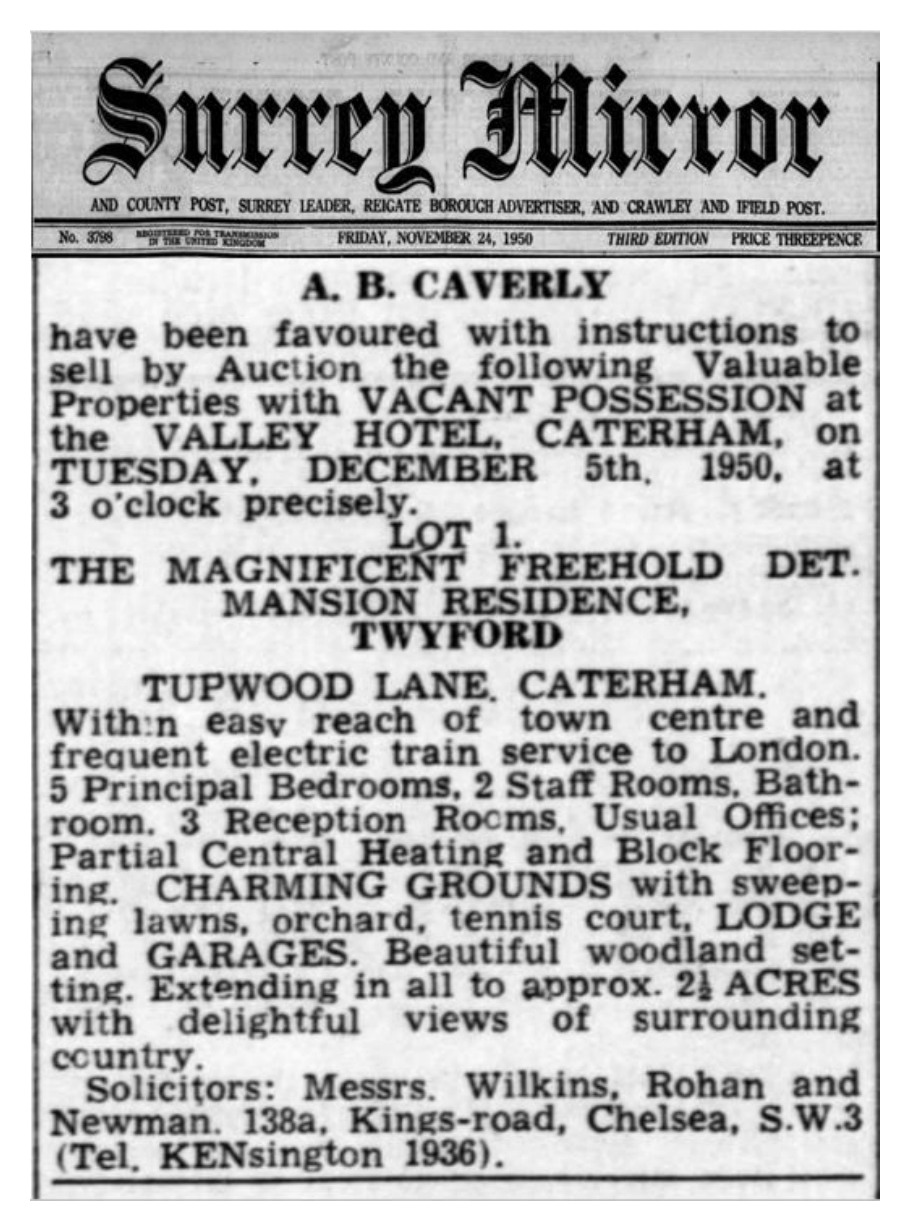
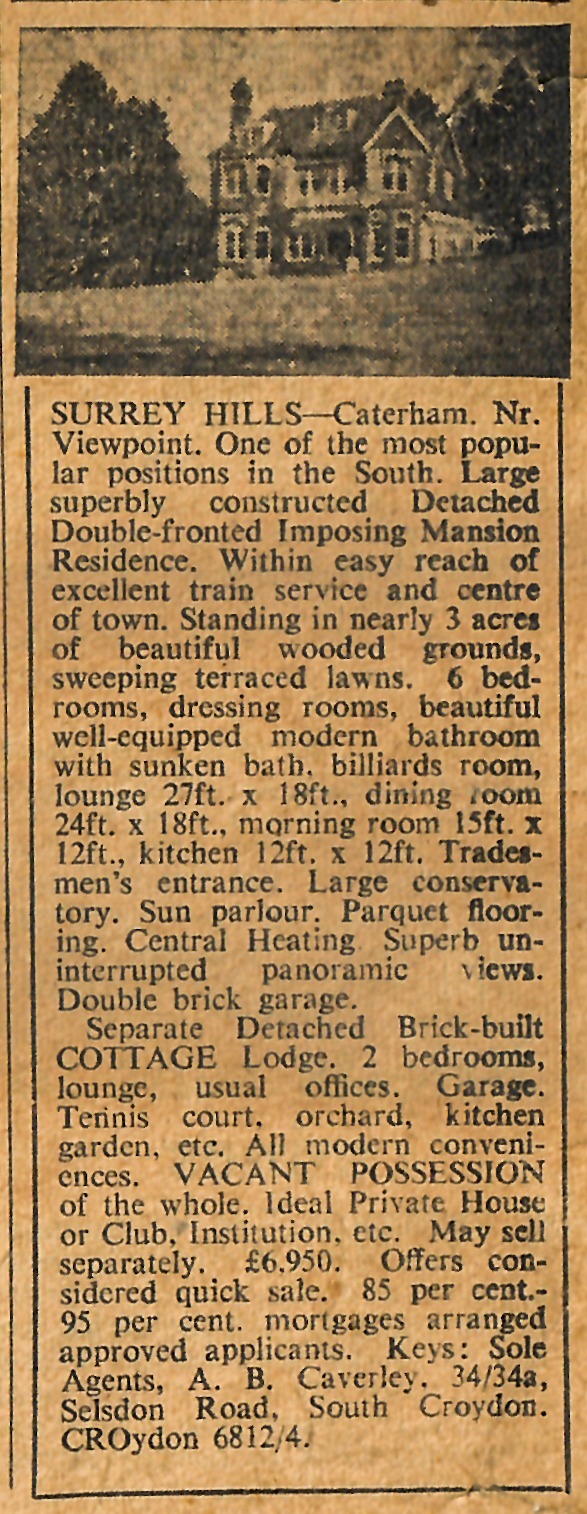
Auction notice · November 1950The Surrey Mirror advertisement offering Twyford as a five-bedroom freehold residence with lodge, garages and approximately two and a half acres.Property advertisement · c.1952A mid-century sale notice describing the main house, detached lodge, tennis court, orchard and nearly three acres before the estate was divided.
Chapter 03
1952—2008
The Bray & Knight families
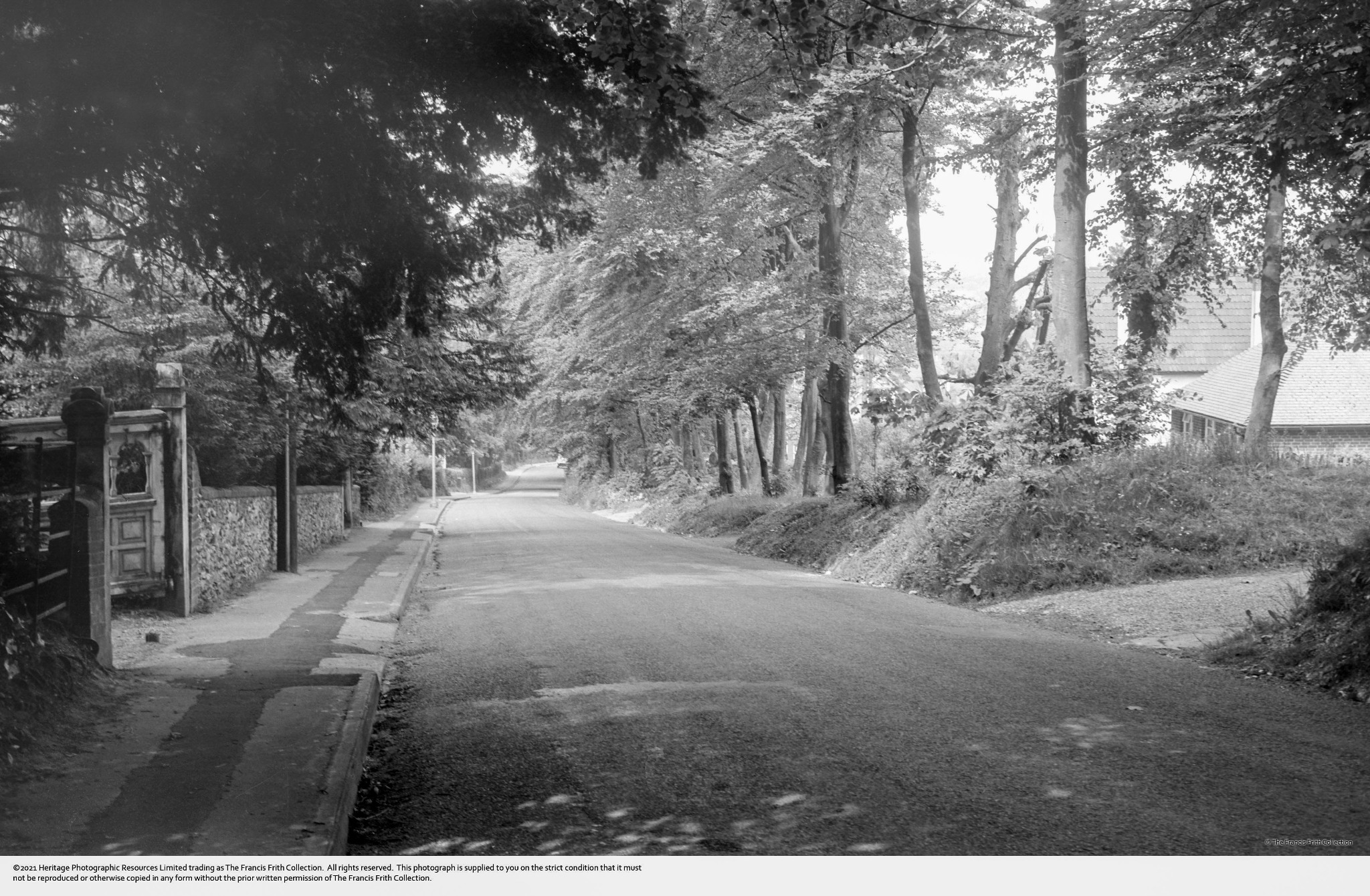
Archive image Tupwood Lane in 1961, the road that has always connected Twyford to Caterham.
The Brays and Knights were long-term custodians of a large, demanding Victorian house—repairing it, adapting it and preserving its character through successive generations.
Harold Wade Bowen Bray and his wife May bought Twyford in 1952, after the lodge, garages and much of the original land were sold separately. Their family tackled practical work from heating and decoration to curtains and garden clearance. After Harold’s death in 1975, their son Professor John Wade Bowen Bray inherited. In 1984 Paul and Claire Knight purchased from him and began a further twenty-four years of repair and renewal.
Key dates
1952
Harold and May Bray buy the main house and about two acres
1968
May Bray dies
1975
Harold Bray dies; John Bray inherits
c.1978
The front chimney is rebuilt after a collapse
1984
Paul and Claire Knight purchase Twyford
2008
The Knight chapter concludes
Family life & further details
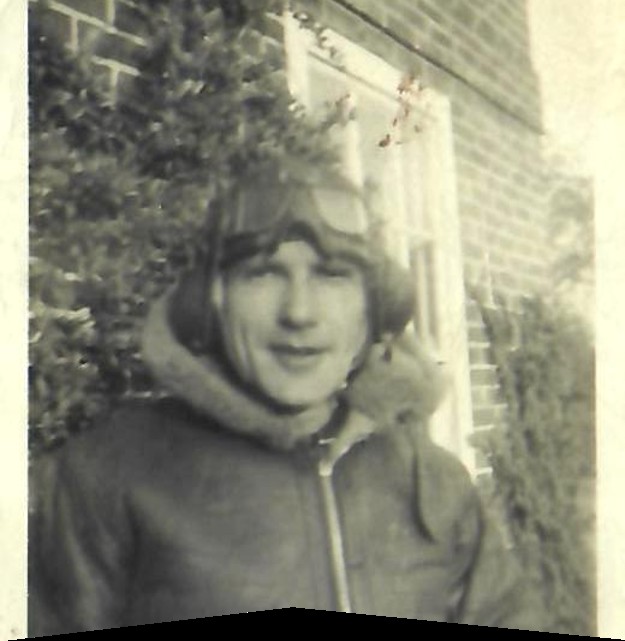
Harold, who qualified as an RAF pilot in November 1918 and returned to train pilots during the Second World War, and May made the house their family home with daughter Joan, son John and the Knight family.
Paul Knight recalls a coke-fired boiler, the conversion of the scullery into a kitchen, new curtains throughout, an orchard and vegetable gardens, and a large copper beech. The family also rebuilt the balcony facade and supporting pillars.
The original estate was progressively divided: Twyford Lodge was converted from stables and rooms above; Blue Cedars was built on the former tennis court; the garden, lodge and garages were separated from the main house.
Professor John Bray, an Imperial College earth-science academic, inherited in 1975. Family recollection records him rebuilding the front chimney himself after its late-1970s collapse.
Paul and Claire Knight bought in 1984 after a poor survey that nevertheless judged the house structurally sound. Their years continued the long tradition of gradual repair and care.
Aviation heritage · Still at Twyford
The propeller on the landing
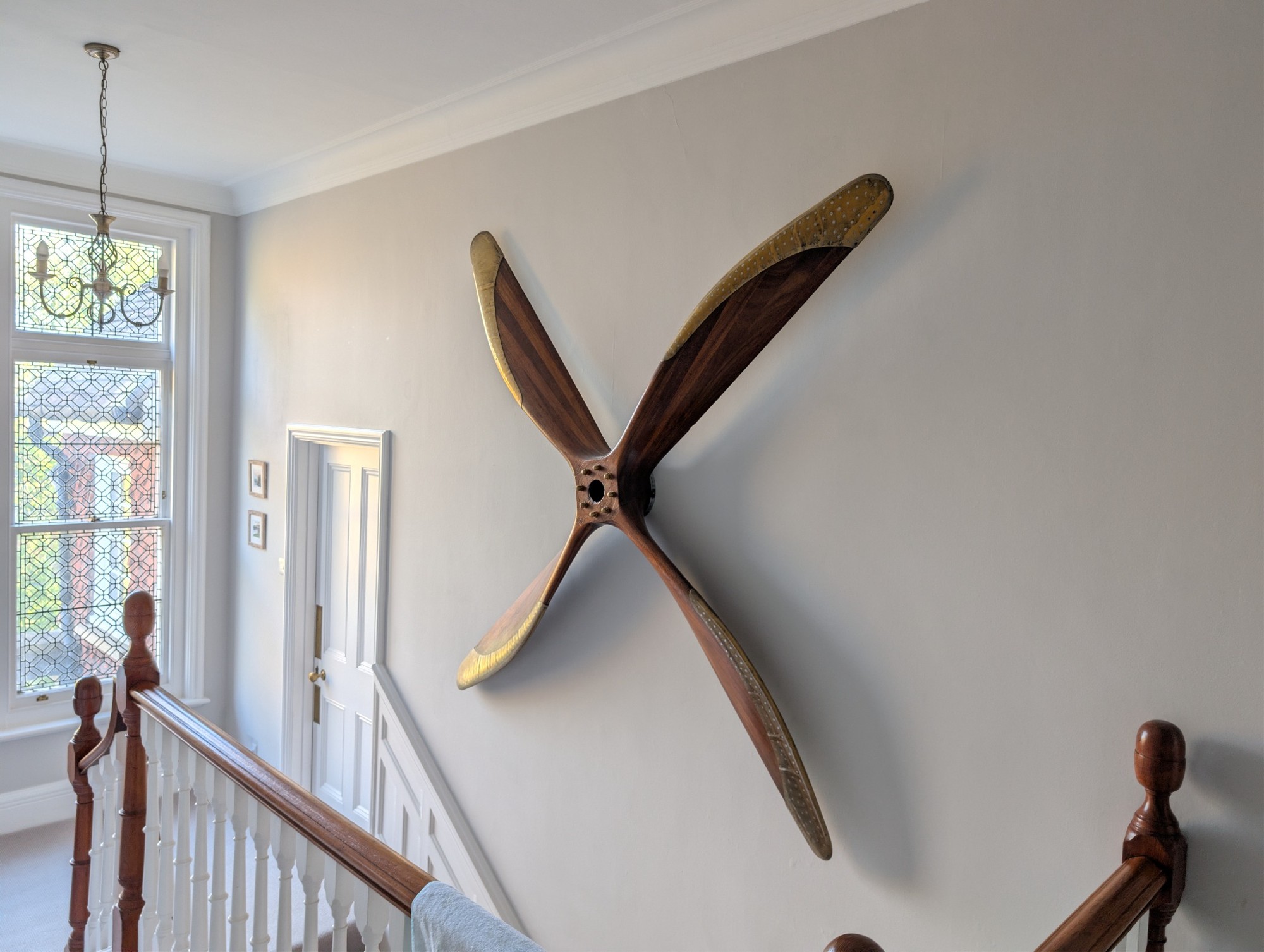
Prominently displayed above the stairs, this First World War F.E.8 propeller connects Twyford’s present-day interior with the aviation story of Harold Wade Bowen Bray.
The F.E.8 propeller overlooking the stairs at Twyford House, photographed in October 2026.
Harold Bray and a continuing tradition
Harold and May Bray bought Twyford in 1952. The family history records that Harold qualified as a pilot in the Royal Air Force on 5 November 1918, just six days before the Armistice. He returned to the RAF during the Second World War, using his flying experience to train a new generation of pilots.
According to the house’s remembered history, a propeller has hung on the wall overlooking the stairs since Harold’s time. The F.E.8 propeller displayed there today continues that tradition: an enduring reminder of a former resident’s life in aviation, set among the timber balustrade and leaded windows of his family home.
A fighter from the early years of flight
The Royal Aircraft Factory F.E.8 first flew in 1915. A single-seat fighter, it used a “pusher” layout, with the engine and propeller behind the pilot. When it was designed, the Allies did not yet have a suitable system for synchronising a machine gun to fire through a revolving propeller. Rear propulsion gave the pilot an unobstructed field of fire ahead.
Its 100 hp Gnome Monosoupape rotary engine drove a four-bladed propeller. The exposed tail booms and bracing created substantial drag, and by its arrival at the front in 1916 the F.E.8 was being overtaken by newer German fighters. Only 295 aircraft were built, making the surviving propeller a distinctive piece of early aviation history.
Harold Bray in RAF flying clothing, May 1942. Photograph from the family history.
The propeller’s recorded details
Maker
Darracq Motor Eng Co Ltd, London
Aircraft type
Royal Aircraft Factory F.E.8
Engine
100 hp Gnome Monosoupape
Reference
T7928
Serial number
3008
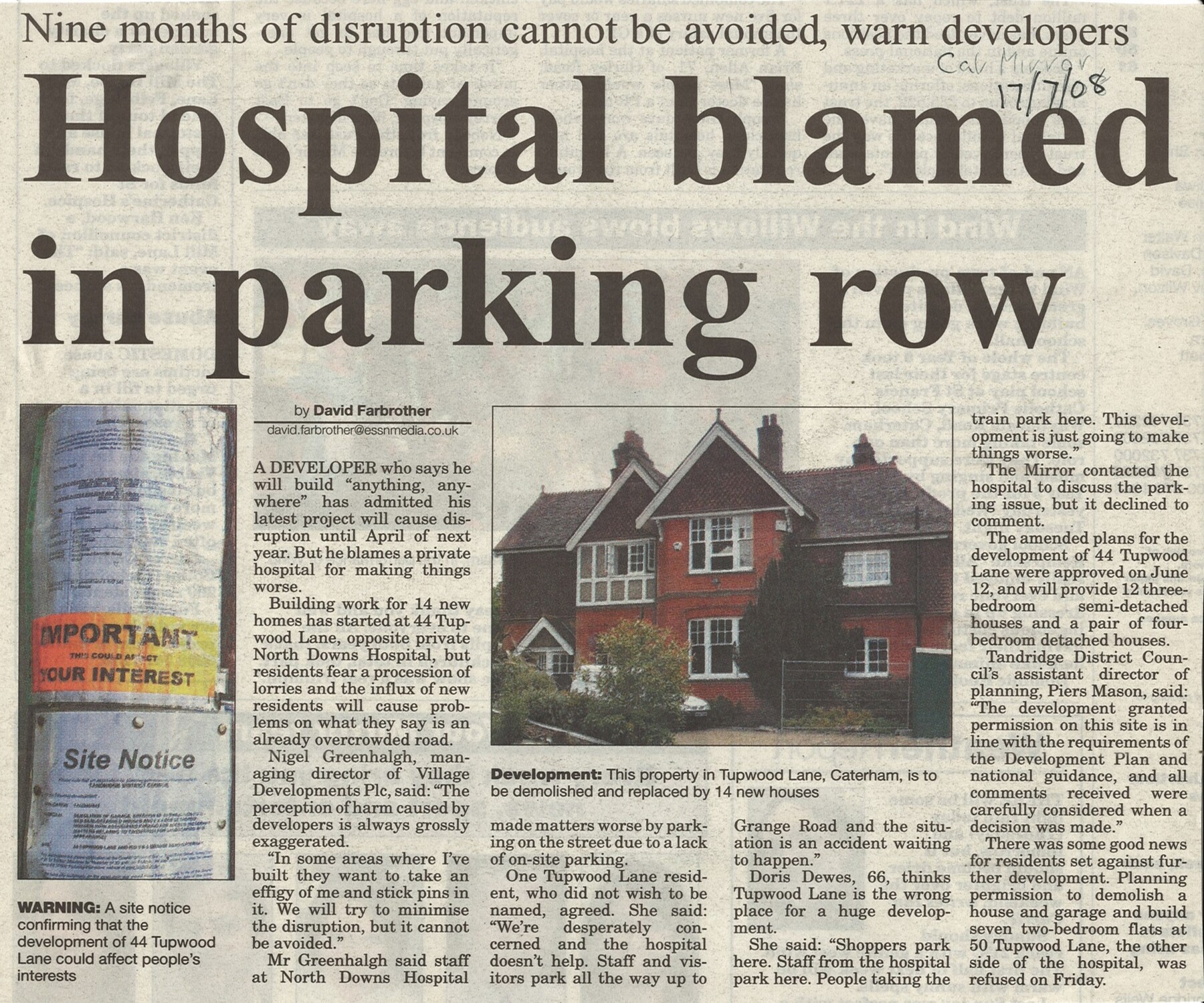
Changing setting · 2008A local newspaper report on the redevelopment of 44 Tupwood Lane, recording the changing surroundings at the end of this period.
Chapter 04
2008—Present
The modern era
Archive image A visual record of the people, rooms and landscape around Twyford.
The most recent chapter balances substantial renewal with a close interest in the house’s surviving materials, plan and remembered stories.
Jason and Nicola Moore bought Twyford in 2008 and carried out major works: renewing the roof and drainage, opening the cellar, rebuilding the garage and reshaping the garden. Rachel and Gavin Bonnet followed in 2015. Mark Winsbury and Silvia Eliasova bought the house in November 2018, undertaking a full refurbishment while continuing to document its original fittings, plans, family histories and changing garden.
Key dates
2008
Jason and Nicola Moore purchase Twyford
2015
Rachel and Gavin Bonnet move in
2018
Mark Winsbury and Silvia Eliasova purchase the house
Ongoing
Original features, documents and restoration recorded
Family life & further details
Before moving in, the Moores bought the house from Village Developments after the wider garden had been redeveloped. Their works included steelwork, cellar alterations, renewed drainage, roof work and extensive planting.
Rachel and Gavin Bonnet moved from Streatham with their children in 2015. After Gavin’s death in 2017, Rachel sold the house in 2018 to be closer to family and friends in south-west London.
The present archive records not just the people who lived here but the physical evidence they left: fittings, plans, photographs, documents, garden changes and room-by-room discoveries.
The current plot is about 0.4 acres, a striking contrast with the roughly seven-acre estate in the first years of Twyford.